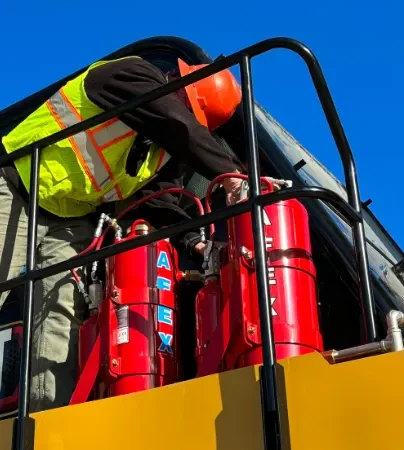

The Truth About False Discharges
A false discharge (also called an accidental discharge) is when a fire suppression system activates even though there is no fire present.
These events are not normal, and in a properly designed and installed system, they should be extremely rare. When they do happen, there’s almost always a clear underlying cause.
Below is a breakdown of the most common reasons we see in the field, starting with the most frequent.
1. Installation issues (the most common cause)
In most cases, false discharges trace back to installation.
Problems don’t always show up immediately either. Sometimes everything looks fine at install, but issues appear later—like when a panel is opened for the first time, when the machine is washed, or after weeks of vibration in harsh operating conditions.
A few key areas matter a lot here:
- Detection wire routing needs to be done carefully. It has to cover high-risk areas, but also avoid pinch points, sharp edges, high heat zones, and areas exposed to water or impact.
- Proper fastening is critical. If the wire isn’t secured correctly, it can shift during operation or get pulled loose during maintenance.
- Protection of the detection circuit helps reduce damage from real-world conditions like debris, abrasion, heat, or moisture.
Most “mystery discharges” usually come back to one of these installation details not being quite right.
2. Human interaction and lack of training
People working on the equipment can unintentionally trigger a discharge in a few different ways.
This is usually not carelessness—it’s just a lack of familiarity with the system.
A few common situations include:
- Missing or damaged actuator seals, which can expose the activation button and lead to accidental contact
- Someone striking or bumping the manual activation point without realizing what it does
This is where training makes a big difference. Anyone working around the system should understand what the components are and what not to touch.
3. Improper isolation during maintenance
When equipment is being serviced, the fire suppression system needs to be properly isolated.
If it isn’t locked out and tagged out, there’s a risk that the detection circuit gets pinched, crushed, or disturbed during other repair work.
This is especially common during mechanical work where multiple teams are involved and the system isn’t always top of mind.
4. Pressure washing and cleaning practices
High-pressure washing is part of normal maintenance, but it’s also a common source of problems if not done carefully.
Blasting water directly at detection components can damage them or create conditions that trigger a discharge.
This doesn’t mean equipment shouldn’t be washed—it just means the system needs to be respected during cleaning.
5. Poor maintenance practices
Like most systems, fire suppression setups need routine inspection and servicing.
When maintenance is skipped or done inconsistently, components can degrade over time, increasing the risk of accidental activation.
A common issue we see is after repairs or component changes:
the system isn’t properly reset, reinstalled, or scheduled for re-inspection.
That’s often where problems start.
6. Damage during equipment operation or repair
Heavy equipment takes abuse, and the fire system is often right in the middle of it.
Things like:
- Damaged hoods or panels
- Welding work without proper isolation
- Strain on detection lines from moving or misaligned components
All of these can impact the system and, in some cases, lead to unwanted activation.
7. Environmental conditions
The environments these machines operate in are harsh, and that plays a role too.
Things to consider include:
- Rock, debris, and falling material
- Wood chips, waste, and industrial byproducts
- Salt, corrosion, and constant vibration
- Extreme wet conditions or high humidity
Over time, these conditions can expose weaknesses in routing or protection if the system wasn’t designed properly from the start.
8. Rare environmental events
In theory, things like lightning or extreme natural forces could cause interference, but in real-world experience, this is extremely rare.
If it does happen, it’s usually considered an outlier rather than a design or installation issue.
Summary
False discharges don’t just happen randomly. In almost every case, they can be traced back to one of three areas:
- Installation quality
- Human interaction or maintenance practices
- Harsh operating environments exposing weaknesses
The good news is that with proper design, installation, training, and maintenance, these events can be reduced significantly or avoided entirely.