Why the New Graco G3 High Flow (HF) Pump Is a Game-Changer for Automatic Lubrication
Why the New Graco G3 High Flow (HF) Pump Is a Game-Changer for Automatic Lubrication
Automatic lubrication systems play a big role in keeping equipment running properly. They help reduce maintenance, extend component life, and cut down on unexpected downtime across construction, mining, industrial, and heavy-equipment applications. The Graco G3 High Flow (HF) line is one of the newer developments in this space, and it’s built specifically for higher-demand systems where reliability and output really matter.
Built for harsh, real-world conditions
One of the first things you notice about the G3 HF pumps is that they’re built to take abuse. These aren’t delicate systems. They’re designed for machines that live in dirt, vibration, moisture, and constant use.
With heavier-duty internal components like an upgraded motor and gearbox, the pump is meant to run in environments like mining equipment, construction fleets, and off-road machinery without constantly needing attention.
In practice, that means fewer interruptions and less time spent dealing with pump-related failures, especially in high-vibration applications where weaker systems tend to struggle.
Higher flow gives you more flexibility
The “High Flow” name isn’t just marketing. These pumps are designed to move more grease or oil, which matters when you’re dealing with larger machines or systems with a lot of lubrication points.
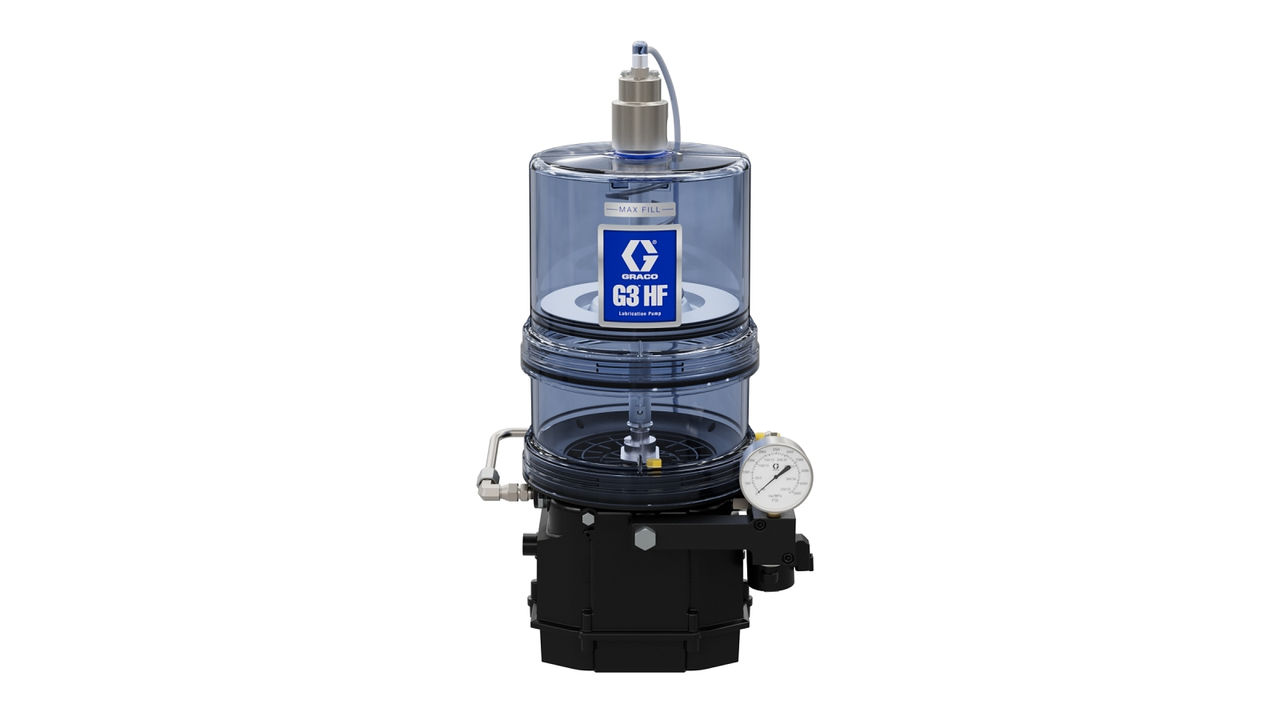
Graco offers the G3 HF in multiple reservoir sizes (4L, 8L, and 12L), which makes it easier to match the pump to the application instead of forcing a one-size setup.
It also handles a wide range of grease grades up to NLGI #2, so it can be used across different equipment types without needing major changes.
For larger or more complex machines, that extra flow capacity helps ensure everything actually gets lubricated properly and on time.
Safer operation and better control
There are a few built-in features in the G3 HF line that make day-to-day operation safer and more predictable.
For example, the auto-fill shut-off helps prevent overfilling the reservoir, which can otherwise lead to spills or mess on site. Low-level switches can also alert operators when grease is running low, or even shut the system down depending on how it’s configured.
Another practical advantage is flexibility in mounting. These pumps can be installed in harder-to-reach areas without making maintenance a headache, which helps with both safety and layout on crowded equipment.
Easier servicing and less downtime
Maintenance is usually where a lot of lubrication systems become frustrating. The G3 HF design improves on that by allowing more service work to be done without completely removing the pump from the machine.
That matters in the field. Less disassembly means faster troubleshooting, lower labour time, and fewer delays getting equipment back into operation.
For operations running tight schedules, even small reductions in downtime add up quickly over time.
Designed to integrate with modern systems
Depending on the controller setup, G3 HF pumps can connect with newer monitoring and control systems, including Bluetooth and cellular-enabled options.
This opens up a few practical benefits:
- Remote visibility into grease levels and system cycles
- Easier programming for lubrication schedules
- Alerts and diagnostics that help catch issues earlier
In real-world use, this kind of monitoring helps maintenance teams move from reactive repairs to more planned servicing, which reduces surprises on site.
Final thoughts
The Graco G3 HF High Flow pump line is really aimed at one thing: improving reliability in demanding lubrication systems.
It combines durability, higher output capacity, safer operation, easier servicing, and modern monitoring features in a way that fits the realities of heavy equipment maintenance.
For teams working with construction equipment, mining machinery, or industrial systems, it’s a solid option for reducing downtime and keeping lubrication systems consistent without constant oversight.